
The hottest listings in real estate aren’t just houses. Intelligent interior design for real estate can be the difference between a property that remains on the market for months and one that sells within days. The right design choices allow buyers to visualize themselves living there, and that’s exactly what sells homes.
Real estate agents and homeowners who get the concept of design psychology have a huge edge. We know how to make them feel larger, brighter and more inviting. They know which colors lure buyers in, and which send them running. Most of all, they know that every dollar invested in strategic interior updates can lead to three to five times as much returned at the closing.
This guide simplifies nine effective tactics that work in the modern marketplace. These are not costly makeovers or complex undertakings. Instead, they’re real-world tactics that turn mundane spaces into buyer magnets. These are concepts that any real estate professional, a seller wishing to get the most from his or her home sale, or an investor looking to flip properly should apply in the pursuit of maximizing return.
Build on a Blank Slate That Everyone Likes
Sure, walls bright purple may match your personality to a tee, but they’re a terrible slash of fearsome for potential buyers. The first rule when it comes to interior design for real estate is to make a blank canvas so that buyers can imagine themselves in the space with their own style.
Neutral doesn’t mean boring. It’s choosing colors that make for a serene and inviting environment. Think soft grays, warm beiges, creamy whites and gentle taupes. These colors help create a sense of more space and light in rooms and suit the broadest possible audience.
Start with the walls. A fresh coat of paint in a neutral color can do wonders to change the look of an outdated room. “Revere Pewter” by Benjamin Moore and “Agreeable Gray” by Sherwin Williams are both popular choices as they complement various light throughout the day.
Don’t stop at the walls. And keep your flooring, countertops, and major fixtures neutral, too. Light-toned hardwood or quality natural-colored laminate flooring trumps busy tile patterns and dark carpeting. In kitchens, the white or light gray cabinets with simple hardware produce a clean, modern aesthetic that buyers go crazy for.
Why Neutrals Are More Effective Than Drama
Buyers want to envision themselves in the space, not you. When they step into a room painted electric blue or papered with busy wallpaper, their brains freeze on how much work will be required to make it their own. It is too much of a mental calculation, so they move on to the next listing.
Neutral colors also photograph better. Because most buyers now see homes online before stepping foot in them, those listing photos need to sparkle. Neutral, light-filled spaces photograph as open and bright; vibrant colors have the potential to appear muted or skewed in photos.
Use Natural Light to Make Rooms Look Larger
Light sells homes. Period. Light sells: That means properties with plenty of natural light sell faster and for more money than dark, claustrophobic spaces. This tactic is all about maximizing every window and source of natural light in your home.
Begin by taking down heavy or dark curtains. Swap them out for sheers or basic blinds that can be completely raised. Wash windows inside and out so they sparkle. You would not believe how much brighter a room is with actually clean glass.
Angle mirrors opposite windows to make them bounce light deeper into rooms. A generously sized mirror in a dining room or living room can effectively double the amount of light in that space. This trick works particularly well if you live in an apartment or home with few windows.
Strategic Lighting Layers Make Rooms Light Up
Natural light is lovely, but you want some artificial lighting that sets the mood. Include three kinds of lighting in each room: ambient (general), task (reading or under-cabinet) and accent (table lamps, wall washers).
Swap old light fixtures with more contemporary ones. That doesn’t mean to blow thousands on designer duds. Simple, clean-lined fixtures from home improvement stores are ideal. Opt for brushed nickel or matte black finishes to create a modern presence in your space.
Light existing dark corners with floor and table lamps. When staging, leave every light in the house turned on. Light rooms feel inviting and secure, while dark spaces make buyers uneasy, wary of what might be lurking about.
Declutter Each Room, Depersonalize Every Single Room
Your family and collections, as well as personal items, are your story. But when people are buying, you want them to be able to imagine writing their own story in that space. Decluttering and depersonalizing are nonnegotiable elements of the best interior design for real estate.
Although it is time to pack up at least two-thirds of their belongings before you list your home. Take down family photos, religious symbols, political memorabilia and anything highly personalized. Clear countertops even if that means just a coffee maker or a plain bowl of fruit. Clear at least 30% out of any closet so that you can make more space for them to look larger rather than stuffed.
If necessary, rent a storage unit. Money spent on storage more than pays for itself when potential buyers are able to clearly see the potential of your home rather than your stuff.
The Three-Box Decluttering Method
Create three boxes with labels that say “keep,” “store” and “donate.” Go through each room systematically. Things you use every day find their way into “keep.” Everything else you’ll want or is valuable at least in your after moving time goes in “store.” The remainder is distributed to donation centers.
Be ruthless with furniture too. Get rid of items that block natural pathways or make rooms feel cramped. Three feet or so of clear walking path should open up in most rooms. If you are squeezing through the side of your couch and coffee table, buyers will get that tight feeling too.
Clear surfaces will give the impression that you have lots of storage space. Clear kitchen and bathroom countertops imply there’s ample space for the buyer’s goods. Cluttered surfaces are as good as shouting “not enough storage”, and they’re a big mood-killer.
Key Room Staging to Demonstrate Perfect Lifestyle
Professional staging has been known to help boost a home’s selling price by 5-15% realtors say. But professionals aren’t always necessary. If you get at least a few of these basic principles down, then hopefully your spaces feel aspirational — the kind of homes that buyers want to live in, even if they never have before.
Concentrate on your most important 3 rooms: living room, master bedroom and kitchen. These spaces play the largest role in shaping buyers’ decisions. The living room should be a relaxing refuge. Group the furniture together to form conversation areas, and position them around focal points such as a fireplace or oversized window.
Someone in the master bedroom should feel as if they are in a hotel suite. Invest in some quality bedding, — neutral colors and lots of pillows. Move exercise gear, laundry baskets and anything that doesn’t add to the tranquil sanctuary of your room.
Kitchen Staging Ideas That Stir The Emotions
In kitchens, homes are sold more than any other room. Clear the counters of absolutely everything except higher-end coffee makers or a bowl of fresh lemons. Store small appliances in cabinets. Get the stove clean enough to eat off of (if we so wish).
Dress the island or breakfast nook with straightforward place settings. This helps potential buyers envision family meals and friend-filled gatherings. Adding a vase of fresh flowers or bowl of fruit brings in life and enhances your environment without making it distracting.
Ensure that cabinet hardware is modern and cohesive throughout. Mismatched knobs and pulls are the mark of cheapness and an earlier time. It costs less than $100 to replace them in most kitchens, but the visual impact is more valuable.
Use Furniture to Improve Flow Strategically
The way you arrange furniture can influence the perceived size and usefulness of rooms. Awkwardly arranged furniture will have a small room feeling even smaller. Well-placed reveals in the flooring will show off the room’s dimensions and maintain natural traffic flows.
Pull furniture off walls in a living room. Suspending a sofa a few inches from the wall ought to have an expansive and room-shaping effect, not become a contraption that fills up every available inch of space. Form real conversation clusters instead of having furniture back up against the wall like it’s some kind of waiting room.
Separate spaces in open floor plans using area rugs and furniture groupings. That helps buyers grasp the space. A rug beneath the dining table unmistakably demarcates that area, and a second rug does the same in the living room zone.
Room-by-Room Placement Guidelines
In bedrooms, position the bed on the main wall and center it between nightstands. It’s the classic setup, and it reads balanced and hotel-like. Include a minimum of two feet of walking space on either side of the bed.
In dining rooms, tables should be centered directly under the light fixture, and there needs to be at least 36 inches between the table and any adjacent walls or furniture so chairs can pull out. This shows that the room clearly wraps around meals.
In home offices, if possible position the desk facing into a room, not against a wall. This setup is photogenic and far more welcoming than a desk jammed into a corner.
Leap into Quick-Win Updates of High ROI Value
Not all that is good returns better. Some upgrades that can cost thousands may move the needle on selling price only slightly. Some surely were cost effective, but provided a lot of visual bang for the buck. Invest your time and money in high-return projects.
Interior design for real estate pros are aware of these quick wins: changing out the cabinet hardware, swapping outdated light fixtures, painting dark rooms and installing trendy faucets in kitchens & baths. That may be true as these cost between $50 and $500 each, and in perceived value can easily add up to thousands of dollars.
Fresh paint has the biggest return on investment. It’s priced between $1-3 per square foot, installation included, but can bring a 50-100% return in home value. You’ll want to concentrate on rooms that appear out-of-date, or have bold color choices. For more interior design inspiration and tips, visit Chic Interior Ideas to explore creative ways to transform your space.
Update Type | Average Spend | Typical Return | Time to Source/Install
- Interior Painting: $1,500-$3,500 | 50-100% | 3-5 days
- Cabinet Hardware: $75-$200 | 75-150% | 2-4 hours
- Light Fixtures: $200-$600 | 60-100% | 1 day
- Faucet Replacement: $150-$400 | 70-120% | 2-3 hours
- Door Hardware: $100-$300 | 80-140% | 3-5 hours
Small Bathroom Updates to Make When You’re Trying to Sell a Home
Bathrooms really determine buyer decisions, and full renovations are $10,000 to $25,000. Instead, make strategic cosmetic updates. Replace the toilet seat, faucet and shower head with updated editions. Re-caulk the tub and shower. Install a new mirror and light fixture.
You don’t need a costly gut renovation to make bathrooms look freshly updated. ALWAYS use chrome and brushed nickel instead of old brass or oil-rubbed bronze.
Replace those old bathmats, shower curtains and towels with something plush and white. White towels and accents create a spa feel in bathrooms that are clean. Colored towels, especially used ones, date and appear dirty even when they are clean.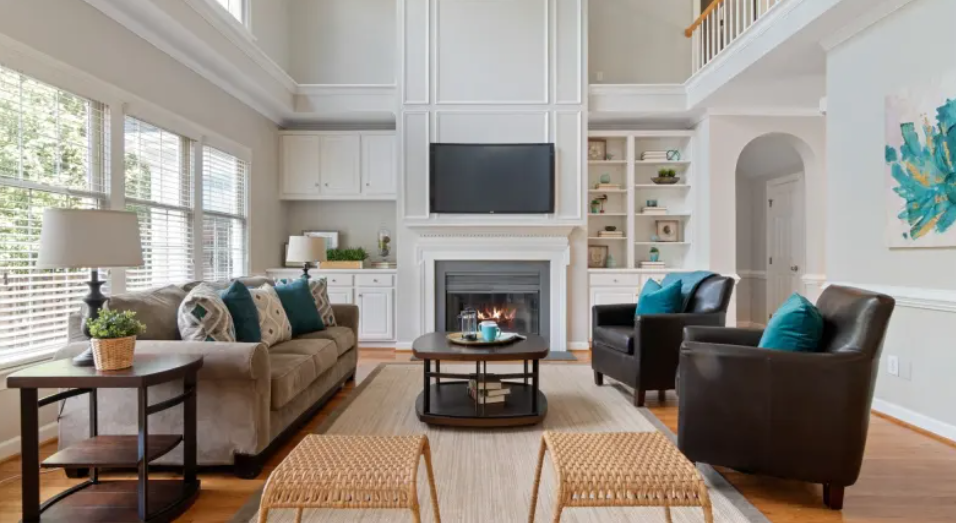
Feature Architectural Details and Special Elements
There are unique elements in every home that make it different from cookie-cutter properties. Your job is to ensure that buyers are aware of them. Outlining crown molding, bookshelves that are built in, bay windows, brick walls that are exposed and wood floors could be your features to highlight.
Paint crown molding and trim in bright white so it pops against wall colors. This defines and showcases quality. Mop, wax and shine wooden floors until your reflection can be seen in them. Have a pro refinish them if they’re damaged — it costs $3-5 per square foot, but restores wood floors with that brand new shine.
Highlight architectural features through lighting and furniture location. A reading chair in that bay window, a tiny side table and lamp. Style built-in bookshelves with a third books, a third objects and a third empty space.
Getting Creative With Fireplaces and Statement Walls
Buyers love fireplaces, which are the kind of natural focal points people covet. You should clean it completely, much in the same way you would hearth and surround. If the brick is old fashioned, paint it white or gray for a contemporary update. Position furniture toward the fireplace for a cozy conversation space.
When executed properly, accent walls do work. Pick a wall in a room, typically the one you see upon entering it, and paint it a shade or two darker than the other walls. This adds depth and interest without taking over the room. Steer clear of busy wallpaper or too many accent walls — multiple sources of interest will feel jittery.
Unless your exposed brick is in terrible condition, or you have original details that are still in great shape, all that stuff should remain natural. These are the sorts of characteristics new construction can’t replicate. Clean them well and brown them up right to show off their texture.
Generate Curb Appeal That Allures Buyers Indoors
Interior design for real estate actually begins before potential buyers step through the door. The outside builds first impressions that color what they see of everything inside. Bad curb appeal can result in buyers to not even go inside the house for a showing.
Pressure wash the exterior, driveway and walkways. At $150-$300, this is an easy do and that year of grime instantly goes away. Paint the front door a warm color such as navy blue, deep red or classic black. Instead, upgrade the door hardware and house numbers to contemporary versions.
Plant oversized matching planters with colorful blooms on either side of your entry. Keep the lawn mowed, edges clean and beds weeded. It suggests to potential buyers that something must be beat up and ignored elsewhere, too. Dead plants and overgrown bushes suggest that the property is not well cared for, so what else might there be left unattended?
Outdoor Spaces That Double as Living Room Extensions
Outdoor living spaces are being valued more and more by buyers. Clean and set up patio or deck furniture so that these spaces read as extensions of indoor living. Layer in outdoor rugs, throw pillows and solar lights to set the mood.
A bistro set, and some colorful umbrella (even a small one makes you feel like you’re on vacation) if you’ve got just enough for a balcony or deck. This is proof that every little bit of space outside is usable and fun. Scrub the grates until they shine like new, or stow it if the thing is beyond repair.
Fix or replace worn fencing, broken latch gates and cracked pavement. Little things like these can make a big negative impression. And buyers figure if you haven’t taken care of what they can see, then you likely haven’t maintained what they cannot see, either.
Add Emotional Bonds and Ties That Bind (a.k.a. “The Little Things”)
The last layer of interior design that we switched up and tailored for real estate is creating moments that make the buyer fall in love. It’s these little touches that evoke emotional responses — to convert casual interest into potential offers.
Fresh flowers all around the house bring life and a bit of scent. Stick to white blooms or a monochrome bouquet for elegance. Position bouquets in the foyer, kitchen and master-bathrooms.
Bake cookies or make coffee prior to a showing to create inviting smells. Of all the five senses, smell has the strongest connection to memory and emotion. A lovely smell will encourage people to linger and remember your home more favorably than the others they’ve seen.
Strategic Additions That Supplement Without Overpowering
Follow the ‘rule of three’ for accessorizing surfaces. Three items of different heights add interest to the display without appearing crowded. A tall vase, medium candle and small decorative box would do more to add dimension than five similar-sized objects.
Bring texture in with throw pillows, blankets, and area rugs. And that’s what these things are – they make spaces feel cozy and layered, but removable. Keep the colorways minimal and let the pattern do most of the talking (or add a fun twist to an otherwise-classic palette).
Books are your friends when it comes to staging. Coffee table books on architecture, travel or art are shorthand for a cultured existence. In groups of two or three, stack them on coffee tables, nightstands and console tables.
Make the dining room table as if guests are coming for dinner. Simple white dishes, cloth napkins and a low centerpiece should suffice. This tableau enables buyers to envision themselves hosting in the space, which forges an emotional connection to the lifestyle your home provides.
Frequently Asked Questions Regarding Interior Design for Real Estate
What’s a reasonable amount to invest in interior design updates before putting your place on the market?
Budget 1-3% of your home’s value on strategic updates and staging. That’s $3,000 to $9,000 for a home valued at $300,000. Concentrate on high-impact, low-cost moves — painting, decluttering and changing fixtures is more important than expensive renovations. The objective is attractive look at a not-exorbitant price.
Should I use a professional stager or do it myself?
Professional staging typically runs $1,500-$5,000, depending on your market and home scope. It is logical for higher-end homes ($400,000+) or those that have been sitting on the market without success. For most, DIY staging’s principles save money while producing great results. Think about a staging consultation ($200-$500) where an expert provides some specific advice that you carry out on your own.
What are the best colors to sell your home quickly?
You’re good with warm neutrals like greige (gray-beige), soft gray, warm white and the muted end of the taupe range. This palette has most universal appeal and makes rooms appear larger and more light filled. Stay away from pure white (which can read as sterile) and dark colors (which can shrink the space), or trendy hues such as millennial pink or on-trend navy that may not age well. For professional color advice and palette suggestions, check out resources from Sherwin-Williams for expert guidance.
How far in advance of listing should I start getting my home’s interior ready?
Begin at least 4-6 weeks prior to listing. This allows you time to paint, make repairs, declutter and stage without having to scramble. Projects always take longer than you think they will, and once the project does look perfect, you’ll want time to get professional photos done. The prepping is important to ensure top dollar.
Do I have to renovate my kitchen and bathrooms to sell?
Unless your kitchen and bathrooms are hopelessly dated (think 1980s oak cabinets and pink tile), full renovations aren’t needed. (They never pay off.) Instead, concentrate on cosmetic updates: paint cabinets, update hardware (including faucets and light fixtures), re-grout tile and make sure everything is spic and span. These will set you back only a fraction of renovations but nowadays look “current”.
How much does furniture arrangement matter for selling?
Extremely important. Bad furniture arrangement a room feel small or out of place. Good furniture placement emphasizes room dimensions, enables a natural traffic flow and allows for buyers to visualize how they would use each space. Take out any bulky furniture to free up space, establish some conversational nodes, and keep circulation flowing through your home.
Do I need to clear out personal things for staging?
Clear 90% of personal materials, particularly family photos, political and religious items as well as collections. The items you do keep should be generic and evocative of a better future — fancy vase, coffee table books, even just canvases. Buyers must be able to visualize themselves in the space, something that is impossible when there are signs of your life everywhere they look.
Last Thoughts on How to Sell by Smart Design
The relationship between good interior design for real estate and successful sales is irrefutable. There’s a simple rule in real estate that always applies: clean, neutral and well lit will sell better and quicker than cluttered, dated or too personalized.
These nine techniques succeed because they are dealing with how buyers actually process decisions. Folks buy based on emotion and then rationalize with logic. If a home feels right — if they can envision Sunday mornings in that light-filled kitchen or cozy evenings in the inviting living room — they make offers.
The investment is small compared to the possible return. A few thousand dollars spent on paint, staging and strategic updates can add tens of thousands to your selling price. Even better, a well-staged home sells quickly which lowers your carrying costs and the anxiety associated with having to maintain your property for unnecessary long period.
Basics first: neutral colors, as much natural light as possible and ruthless decluttering. Then layer on the details: how to stage strategically, place furniture so it makes sense, add emotional touches that create connections. Concentrate your budget on high-return additions rather than costly renovations that will not recoup their costs.
Every market is unique, remember that. Work with your agent to know what local buyers want and are willing to spend. What’s effective in an urban condo market may be different from suburban family homes or rural land.
The trick is to offer your home as a blank slate onto which potential buyers can paint their own dreams. Remove all traces of your life there and craft rooms that are aspirational but feel attainable. When a buyer walks through your door, they shouldn’t find a house for sale, it should be your home waiting to welcome them.
These aren’t just strategies for the sake of giving you something to think about – these are tested methods that professional real estate investors and high producing agents use day in and day out. By the thoughtful execution of these suggestions, you’re giving your property the best opportunity to be sold quickly and for top dollar. But that’s the brilliance of smart interior design when selling a house.