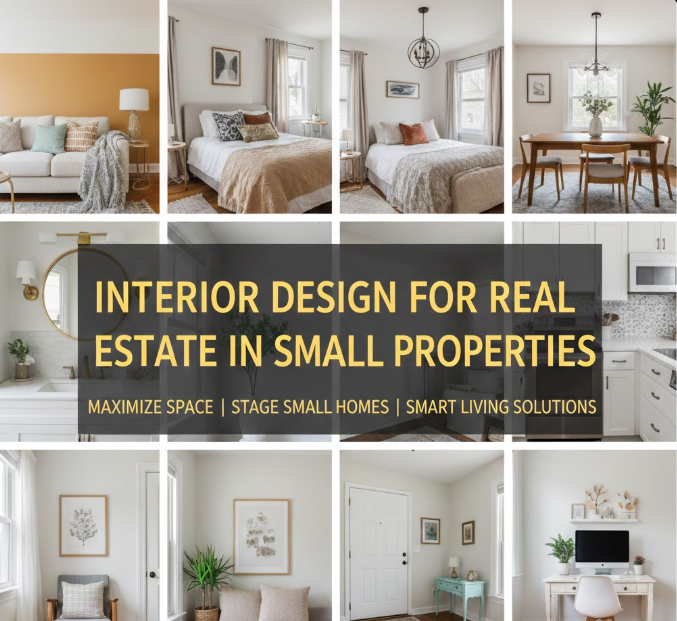
Interior design for real estate is your secret weapon when selling or renting a small-ish space. The right design can turn a cramped apartment or tiny house into a space you’re really excited to call home, and in this post, let’s look at how. The reality, however, is that many buyers and renters scroll past units which appear crowded or dark, but stop and schedule showings when they find homes that feel open and inviting.
Small spaces don’t have to feel small. And with smart design tricks, clever furniture arrangement and the right colors, you can make every square foot count. This guide will explain how to utilize interior design in order to maximize your property’s appeal and market value even if room is tight.
How do you design small spaces?
The specific challenges small properties bring along in the market. Buyers often fret over questions like if their furniture will fit, if there’s storage and if the space will feel small. Your task is to banish these concerns long before potential buyers set foot in the door.
First impressions happen online now. Many people are checking listings on their phones during a lunch break, or while taking it easy at home. If your photos show a cluttered, dark or awkward space, they’ll swipe right past your listing. But when they spot cheerful, neat rooms with good flow, they’ll put your home on their must-see list.
The good news? In fact, small spaces are often easier and cheaper to stage than houses. You require less furniture, fewer accessories and less paint. The hard part is making intelligent decisions that use every inch.
Colors That Open Tight Spaces
Dark colors can close off a room, while light colors can make it feel larger. This is not a personal opinion — it’s the way our eyes and brains collaborate. Lighter colors like white, cream or light gray and soft beige reflect more light and can make walls push out visually.
All walls in your home should be painted the same light, neutral color. This generates flow and the space seems larger than it really is. When you do different colors in each room, it chops up the space visually and everything seems tinier.
But all-white doesn’t have to equal boring. Accessories, artwork and textiles can give a room personality. A white space filled with colored pillows, plants and art feels clean and contemporary. The same room with dark brown walls creates a cave-effect — no matter how many windows you have.
Ideal small property wall colors:
- Crisp white
- Warm cream
- Light gray
- Soft beige
- Pale blue
Ceiling color matters too. Keep ceilings white (or, if you prefer, a shade lighter than the walls). This has the effect of lifting the eye upward, and giving ceilings more height. Some designers use a very pale version of the wall color for the ceiling, which can be successful if your room gets ample natural light.
Furniture Selection and Placement Strategies
The No. 1 mistake people make in small spaces is to use furniture that’s too big. A massive sectional feels great to lounge on, but being able to walk and float around it is key in a small space.
Choose furniture with exposed legs. Seeing the floor under furniture helps a room feel more spacious. When sofas and chairs rest on the floor, they create visual heaviness and make a room feel overly crowded.
Scale matters enormously. A full or queen bed, rather than a king, in a small bedroom. Opt for a loveseat or apartment-size sofa instead of a standard two- or three-seater. Stores sell “apartment scale” furniture, designed to fit in small spaces.
Smart furniture options for tiny homes:
| Room Type | Don’t | Opt for Instead |
|---|---|---|
| Living Room | Large sectionals | Apartment size sofa, raised on legs |
| Bedroom | King beds, boxy storage | Full/Queen beds, floating storage |
| Dining Area | Six-seat tables | Round bistro tables or wall-mounted drop-leaf |
| Home Office | Big executive desks | Wall mounted desk or compact writing table |
Misplaced furniture makes rooms feel smaller. And floating furniture off walls will help a room feel larger. That’s counterintuitive, obviously, but it works. When the furniture is all around the walls, it’s a waiting room. Pull the sofa a few inches away from the wall, and all of a sudden the space has dimension and interest.
Multi-purpose furniture keeps space and adds to its value. These are the pieces that show consumers how they can live comfortably in tighter square footage — a coffee table with storage, an ottoman that opens up, a daybed that doubles as both seating and sleeping space.
Making the Most of Natural Light and Brightness
Light has a way of transforming even the smallest spaces into spacious, inviting places. Homes with good natural light sell faster and for more money than dark homes of the same size.
Window treatments require especially careful consideration in tight spaces. Heavy drapes that block light make small, dark spaces feel like closets. Instead, you can use sheer curtains, light-filtering shades or simple roller blinds in white or cream.
Install curtain rods close to the ceiling, not just above window frames. This brings the eye upward, and gives a feeling of taller ceilings. Curtains should just barely touch the floor for a well-tailored look.
Mirrors are the magic in small spaces. A floor-to-ceiling mirror on the opposite wall reflects light around the room and creates an illusion of an additional window. In addition, mirrors can give the illusion of added depth, which makes rooms appear twice as big.
Place mirrors strategically:
- Opposite windows to bounce natural light
- At the far end of corridors to increase their depth
- Over sofas or consoles for layered interest
- On closet doors to create more space on the walls
Artificial lighting needs layers. Don’t depend on one overhead fixture. Layer in table lamps, floor lamps and wall sconces to add pools of light around the room. This will make your spaces feel warmer and more three-dimensional.
Storage Solutions That Don’t Take Up Space
You know small-home buyers are fixated on storage. When they notice clutter or things piled in corners, that’s where they think the property falls short on storage space. Your mission is to show them otherwise with these interior design for real estate ways to emphasize storage potential.
Built-in storage doesn’t require floor space. Wall-mounted shelves, floating cabinets and built-in bookcases also offer storage without shrinking rooms. They are also more polished, and seem to be permanent, compared with free-standing furniture.
Vertical space is your best friend. In modest properties, you have to think upward. Install shelves high on walls. Skip the short, wide bookcases for tall, narrow ones. Stack storage cubes vertically!
It’s always best to hide your storage and keep things looking clean and neat. Options like ottomans with storage, beds with drawers underneath and benches that open up serve as extra places to stash items without the visual clutter.
Creative Small Space Storage Ideas:
- Over-the-door organizers in closets and bathrooms
- Wall-mounted spice racks in kitchens
- Hanging pot and pan racks in kitchens
- Floating bookshelves in neglected corner spaces
- Under-stair storage in multi-level units
Closet organization systems display the storage potential. A neatly-organized closet with uniform hangers, shelf dividers and storage boxes appears to be a whole lot larger than a crowded mass of clothes. Put in a basic closet system so you can show how much storage the space will actually have.
Creating Visual Flow Between Rooms
In small properties you frequently see several rooms at once. This means that you have to get all of the visible areas working together visually. When rooms clash with different styles or colors, it makes the property seem chopped up and small.
Continuity in flooring is more significant than people realize. Seamless transitions from one room to the next help spaces feel cohesive. Using the same flooring throughout a small space creates an unbroken visual plane, which can make a narrow apartment feel wider. Separate flooring in every room creates stopping points which can make the space seem smaller.
If you can’t replace all the flooring, at least keep it in the same color family. Light wood, light tile and light carpeting all work together more easily than mixing dark with light.
Sightlines need attention. Stand in your front entryway and look around. What do you see? You want to be able to see into adjacent rooms or areas, and you want things in all of those spaces to look purposeful. Get rid of furniture or items that are obstructing these key sightlines.
Transitions and doorways should work seamlessly. If you have doors that you seldom close, consider removing them altogether or replacing them with pocket doors. Every doorway or passage is a choice whether to make the space feel more open or more chopped up.
Decluttering and Depersonalizing for Showings
The less stuff you have in your property, the larger it appears. This is probably the number one rule of interior design for real estate with small spaces. Every item you remove makes rooms seem larger and encourages buyers to envision their own belongings in the space.
Start with removing 50 percent of what is in all your rooms. This may sound dramatic but it works. Store, donate or sell your stuff. You don’t have to live in this space long-term — you’re preparing it for sale or rent.
Personal items need to go. They tell buyers “this is someone else’s home.” You want them to think, “That could be my home.” Neutral, depersonalized spaces allow buyers to mentally project their own lives into the property.
The counters in the kitchen and both bathrooms should be almost clear. A coffee maker, perhaps, and a tiny plant on kitchen counters. A soap dispenser, and perhaps a small tray containing hand lotion in bathrooms. That’s it. Counters devoid of clutter make these rooms seem larger and cleaner.
Minimalism creates the appearance of more space. This doesn’t imply that your home should appear sterile, or unlived-in. A few well-chosen accessories lend warmth without clutter. One lovely vase with fresh flowers beats twelve fussy knickknacks, hands down.
Budget-Friendly High-Impact Updates
The good news is that you don’t have to spend thousands of dollars to increase a small property’s appeal. Some of the most impactful upgrades are really inexpensive and make a huge difference.
Paint is the highest leverage tool in real estate staging. Neutral paint in light tones gives tired, dark rooms a new lease of life as bright modern interiors. You can repaint a whole tiny apartment for a few hundred bucks when you do it yourself.
Hardware updates can be minute and relatively inexpensive. It’s easy to instantly freshen up kitchens and bathrooms by replacing old cabinet knobs, drawer pulls, and light switch covers with modern options. Opt for brushed nickel or matte black, both of which have a current feel.
Changing out light fixtures definitely makes a big difference for not much money. Replace dated brass fixtures or boring builder-grade lights with new, simple fittings from the hardware store. You can find some stylish picks for $30 to $100 per fixture.
Deep cleaning doesn’t cost a cent (other than your time) and it’s absolutely essential. Small areas of dirt and wear stand out more in a small space than they do in a large one. Scrub grout, wash windows (inside and out), dust baseboards, and erase any evidence of wear or neglect.
High-impact, low-cost updates:
| Update | Approximate Cost | Impact Level |
|---|---|---|
| Paint the entire small property | $150-$400 | Very High |
| Replace all hardware | $50-$150 | Medium-High |
| Update light fixtures | $100-$400 | High |
| Deep clean everything | $0-$200 | High |
| Add mirrors | $30-$200 | Medium-High |
| Fresh flowers and plants | $20-$50 | Medium |
Peel and stick solutions are temporary enhancements without permanent adjustments. Peel-and-stick tile for backsplashes, removable wallpaper used on an accent wall, adhesive floor tiles all can revitalize dated spaces without a major remodel.
Smart Layouts for Various Types of Tiny Properties
Different types of small properties require different design solutions. A studio apartment brings different challenges than a one-bedroom condo or tiny townhouse.
Studio Apartments
Studios need clear zone definition without walls. Define your sleeping area, living area and dining area with area rugs. Use furniture placement to naturally separate zones.
Some room dividers make splendid additions to studios, but use discretion. Bookshelf dividers allow light to flow freely, but create separation. Curtain dividers are flexible — open them during the day for extra space, close them at night for privacy.
For studios, consider Murphy beds or wall beds. By day, they fold up to create more room for living; at night, they’re pulled down for sleeping. Today, Murphy beds are a whole lot prettier than the clunky models you might have in mind from decades ago.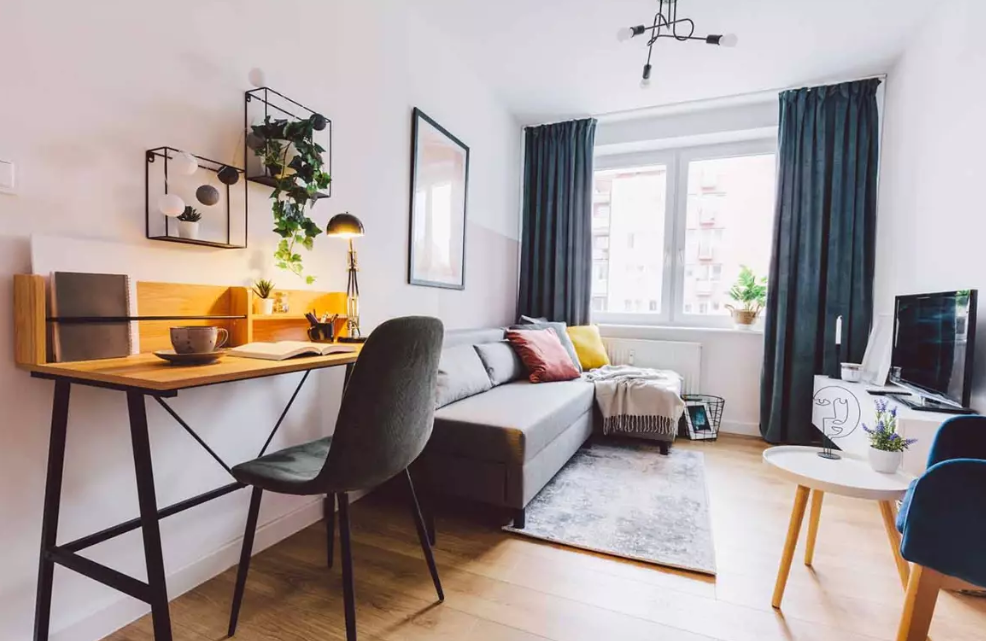
One-Bedroom Apartments
One-bedrooms should play up the bedroom as a major selling point. Create a tranquil, expansive retreat feeling in the bedroom. Furnish only with the essentials, and steer clear of ornamental furniture.
Open floor plans in one-bedrooms require thoughtful furniture placement. Make sure your conversation areas don’t obstruct the traffic flow. Be sure you can walk from the front door to the bedroom and kitchen without squeezing past furniture.
Small Townhouses
Multi-level small townhouses require visual continuity from one floor to the next. Stick with a single color palette on all levels. This provides flow and makes the property feel more cohesive and bigger.
Stairways deserve attention in townhouses. Keep them clear and well-lit. A cluttered, dark staircase makes the entire property feel smaller and less inviting.
Small Space Professional Photography Tips
The best interior design for real estate won’t sell a property if photos look terrible. Small spaces can be particularly difficult to photograph, but there are some tricks that make a tremendous difference.
Wide-angle lenses make rooms look bigger but be conservative. Too much wide-angle distortion just looks fake and can actually turn buyers off. For shooting most small properties, a moderate wide-angle lens (around 24mm or 28mm equivalent) should work well.
The best shots come from the corners, which allow you to show more of the room. Shooting from a corner, capturing a view across the room, provides the broadest perspective and makes spaces appear more open.
Vertical shots are flattering to rooms with high ceilings. They add height to a room and help make it feel less boxed in. Vertical and horizontal shots will give you different perspectives on each room.
Lighting matters more than an expensive camera. Open all curtains and blinds. Switch on all lights in the room and adjacent rooms. Shoot during the day when natural light is available. You might want to hire a professional photographer who understands how to use supplementary lighting if necessary.
Declutter even more for photographs than for an open house. Cameras don’t miss anything, and tiny spots that are barely noticeable in person can look like massive clutter in photos.
The Psychology of Small Spaces
Understanding why certain design elements work will help you make better choices for your own property. Great small space design isn’t just about making rooms look larger but helping people feel comfortable and relaxed in smaller spaces.
We are naturally drawn to light and open spaces. Dark and cluttered spaces stress people out. When you eliminate these stressors, buyers actually feel better in the space even if they aren’t consciously aware of it.
“Breathing room” is essential in small properties. All objects in a room require space around them. When objects are packed closely together, our brains perceive it as chaos and discomfort. Aim for empty shelves, clear tables and gaps between furniture.
Elements of height and levels add visual interest without incorporating extra square footage on the floor. A tall plant, a vertical piece of artwork or a floor-to-ceiling bookshelf will make ceilings feel taller.
Symmetry and balance are soothing to look at — they make spaces feel more orderly. When furniture and decor balance each other visually, rooms feel better pulled together and larger. That doesn’t mean everything has to match exactly, but strive for visual balance.
Common Small Property Staging Errors to Avoid
Even with the best of intentions, a lot of property owners still make mistakes that inadvertently shrink their own spaces. Steer clear of these common errors and your listing will be in a league of its own.
The No. 1 mistake is too much furniture. Each element should have a purpose. If you’re debating whether to add something, don’t add it. You can always replace it if the room feels too empty (which it probably won’t).
Shoving all the furniture against the walls transforms apartments into doctors’ waiting rooms. Pull furniture out from the walls, even just a few inches. This adds dimension and gives a space that “lived-in” feel.
Blocking windows is a cardinal sin in small spaces. Never place furniture in front of a window. Keep windows free to get maximum light and view.
The wrong-size area rug can make your room look smaller. In living rooms, make sure at least the front legs of furniture are on the rug. Rugs that are too small visually cut up the floor space. In smaller spaces, you could go without rugs entirely to keep the floor plane uninterrupted.
Dark accent walls are almost never a good idea in small rooms. That trendy dark blue or charcoal gray wall you see in a magazine photo of a huge loft is going to make small rooms feel smaller. Keep all walls in light colors.
Dim lighting creates shadows and dark corners that shrink spaces. Include more light sources than you think you need. Small spaces that are bright and well lit tend to look larger than they really are.
Frequently Asked Questions
What is the best color to paint a small home before selling?
Warm white or soft beige is the best for most small properties. Those shades reflect light, create the illusion of more space and will attract the most buyers. Avoid pure bright white, which can feel sterile, and avoid any bold or dark colors altogether.
Should I remove doors in my small apartment to make it feel more spacious?
For small properties, you can remove doors between living areas to make them feel more expansive. But leave the bedroom and bathroom doors. If the doors are outdated or in damaged condition, it would be better to replace them with modern designs than removing them completely.
How much does it cost to stage a small property?
If you have a small property it’s possible to stage effectively for between $500 and $1,500 if you are strategic. Spend on paint, decluttering, deep cleaning and several key pieces of furniture. You don’t have to spend big bucks — you need to scale them correctly and place them strategically.
Are there benefits to hiring a professional stager for a small property?
Professional stagers can give you advice and save you time, but many landlords successfully stage themselves by following common-sense principles in this guide. You might also consider a stager consultation (usually around $100 to $300), during which you can walk through the property and get tailored advice on changes you can make yourself.
What furniture is an absolute must-have in a small living room?
You’ll want a modest-sized sofa or loveseat and at minimum a coffee table. Add a chair or two if you have space, but don’t overdo it. A floor lamp and side table complete the room. Everything ought to be appropriately proportioned for the size.
How can I make a little bedroom look bigger?
Use a smaller bed, such as a full or queen instead of a king; minimal furniture; pieces with exposed legs; and light-colored walls. Add a large mirror; keep bedding simple and light. Get rid of anything that has no clear purpose.
Should I invest in new flooring for a small home before selling?
If current flooring is damaged or outdated, new flooring can add major value. But if the existing flooring is neutral and in fairly decent condition, a deep cleaning may suffice. Choose light-colored floors in small rooms to make them appear larger.
What is good lighting for a small room?
A bright warm-white LED bulb in every fixture is your best choice. Opt for 3000K color temperature to cast a warm but not yellow glow. For uniformity, ensure all bulbs have the same color temperature throughout the entire property.
Making Your Small Property Competitive in the Market
Small properties can be desirable enough that people are willing to pay a premium, if they’re presented right. The challenge becomes showing buyers not what the property lacks in space, but all that it offers in lifestyle, efficiency and smart design.
When considering every aspect of interior design for real estate in small properties, aim to make whoever wants to rent or buy this space feel they can easily live there comfortably and happily. When you get that part right through thoughtful design elements, staging and styling, you transform it into the listing that gets multiple offers rather than one that sits on the market.
The investment of time and money that you put into preparing your small property pays dividends when the strong offers come in fast. Buyers today are savvy. They’re able to see past clutter and bad presentations, but they simply don’t want to. By doing the work for them and showing them a move-in ready, beautifully designed small space, you are eliminating obstacles and objections before they even come up.
Don’t forget that small does not mean less valuable. Indeed, some of the priciest real estate in the world consists of tiny, perfectly conceived spaces in desirable locations. With consistent, well-thought-out creativity and commitment to following interior design principles, your small property can shine in the market.
Begin with the fundamentals: declutter, paint in light neutrals, maximize natural light, choose furniture that fits the space and create unobstructed sightlines throughout the home. These foundational steps transform a space far more than any expensive renovation.
Then add the finishing touches: fresh flowers, plush towels in the bath, new throw pillows on beds and sofas, and perhaps a subtle scent — vanilla or fresh linen. These little details have a big emotional impact and can totally win over buyers, making them not mind at all about minimal square footage.
The market rewards properties that appear move-in ready, feel more spacious than their dimensions suggest and photograph beautifully for online listings. With the tactics in this guide, your small property will be able to check all those boxes and make other listings look dismal by comparison. The result? Quicker sales, increased offers and happier buyers who are thrilled with their new home — regardless of its smaller size.