Introduction: Why Your Home’s Look Matters More Than Ever
Great property interior design is no longer just about looking good in photos. Today, it’s about how a space feels, functions, and supports the people living in it.
Whether you own a cozy apartment or a sprawling family home, the way you design your interior shapes your mood, productivity, and daily comfort. In 2025, design trends have shifted away from cold, ultra-minimalist spaces toward warm, purposeful, and human-centered environments.
People want homes that tell a story. They want rooms that feel alive, calm, and deeply personal. And thanks to new materials, smarter tech, and a growing focus on sustainability, achieving that has never been more exciting.
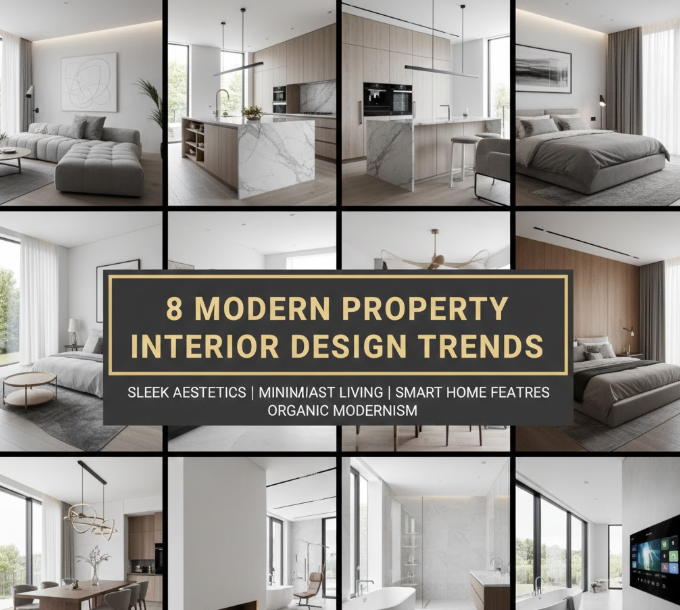
In this guide, we break down 8 modern property interior design trends that are changing the way people think about their living spaces. Each trend is practical, visually stunning, and backed by what real homeowners are choosing right now.
Trend #1: Biophilic Design — Bringing Nature Indoors
What Biophilic Design Actually Means
Biophilic design is all about connecting your home to the natural world. The word “biophilic” simply means “love of nature.” This design approach brings elements like plants, natural light, wood textures, stone, and flowing water into everyday interiors.
It’s not just beautiful — it’s science-backed. Studies show that living near natural elements reduces stress, improves focus, and even boosts sleep quality.
How to Use It in Your Home
You don’t need a greenhouse to pull this off. Start small:
- Place potted plants on windowsills and shelves
- Use wooden furniture with visible grain patterns
- Install large windows or glass doors to flood rooms with natural light
- Add a stone accent wall or a feature using raw materials like rattan or bamboo
- Use earthy color palettes — think terracotta, moss green, sandy beige
A key rule: let imperfection in. Natural materials don’t need to be perfectly smooth or uniform. The slight roughness of a stone countertop or the knots in a wooden beam are what make biophilic interiors feel real and alive.
| Biophilic Element | Where to Use It | Effect |
|---|---|---|
| Indoor plants | Living rooms, bathrooms, kitchens | Cleans air, adds color |
| Natural wood | Flooring, furniture, shelving | Warmth and texture |
| Stone surfaces | Countertops, accent walls | Grounding and earthy feel |
| Natural light | Any room with a window | Boosts mood and energy |
| Water features | Entryways, gardens, living rooms | Calming atmosphere |
Trend #2: Warm Minimalism — Clean But Cozy
The Problem With “Cold” Minimalism
For years, minimalism meant stark white walls, sharp angles, and barely any furniture. It looked great in magazines but felt uncomfortable to actually live in.
In 2025, a new wave called warm minimalism has taken over. It keeps the clean, clutter-free spirit of classic minimalism but wraps it in softer tones, warmer materials, and more inviting textures.
What Makes It “Warm”
The shift is subtle but powerful. Instead of cool grays and crisp whites, warm minimalism leans into:
- Creamy whites and off-whites
- Sandy beiges and dusty pinks
- Linen, wool, and cotton fabrics
- Curved furniture with soft edges
- Gentle, layered lighting
Think of a room that feels calm and comfortable at the same time. No visual clutter, but also no cold emptiness.
Practical Tips for This Look
You can achieve warm minimalism without redesigning your entire home. Swap harsh fluorescent lighting for warm LED bulbs. Replace angular furniture with pieces that have softer, rounded edges. Add a chunky knit throw over your sofa. Use neutral linen curtains instead of heavy drapes.
The goal is for every item in the room to serve a purpose AND feel pleasant to be around.
Trend #3: Smart Home Integration Done Right
Tech That Blends In
Smart home technology has been around for a while. But in the past, it often looked clunky — bulky speakers, visible wires, and gadgets that clashed with a room’s design.
Modern home interior design in 2025 treats technology as an invisible layer. The best smart homes are the ones where you barely notice the tech at all. It just works, quietly and beautifully.
Popular Smart Home Features in Interior Design
| Smart Feature | Design Benefit |
|---|---|
| Hidden wireless charging spots | No cables on surfaces |
| Recessed smart lighting | Clean ceiling lines |
| Voice-controlled blinds | No bulky remote controllers |
| Built-in speaker systems | No freestanding speakers |
| Smart glass windows | Adjustable privacy without curtains |
Design Tips for a Tech-Forward Home
Run cables inside walls during renovation. Choose smart switches that match your wall finish. Opt for devices with neutral or matte black/white finishes that blend with your color scheme. Use built-in shelving to hide routers and hubs.
The goal is for your home to feel effortless — where a single voice command adjusts your lighting, temperature, and even plays your favorite playlist without a single wire in sight.
Trend #4: Japandi Style — Where Japan Meets Scandinavia
A Design Fusion That Just Works
Japandi is the beautiful child of Japanese and Scandinavian design. Both cultures share a love of simplicity, craftsmanship, and purposeful living. When you blend them, you get something truly special.
Japan brings: wabi-sabi (the beauty of imperfection), dark muted tones, and precise craftsmanship.
Scandinavia brings: hygge (coziness), light wood tones, and functional furniture.
Together, Japandi creates spaces that feel serene, grounded, and quietly sophisticated.
Key Japandi Design Elements
- Color palette: Deep charcoals, muted greens, warm whites, and earthy browns
- Materials: Light ash or oak wood, handmade ceramics, linen, and natural fiber rugs
- Furniture style: Low-profile, simple silhouettes with clean lines
- Decor philosophy: Only keep items that have beauty OR function — ideally both
- Negative space: Don’t fill every corner. Let the room breathe.
Why Japandi Works So Well for Modern Homes
It’s timeless. Unlike trendy maximalist styles that can feel dated in a few years, Japandi interiors remain fresh because they’re rooted in restraint and quality over quantity.
This style also works well in smaller spaces like apartments and townhouses because the low-profile furniture and careful use of negative space actually makes rooms feel larger than they are.
Trend #5: Statement Ceilings — The Forgotten Fifth Wall
It’s Time to Look Up
For decades, ceilings were the most neglected part of home design. A coat of flat white paint and that was it. But today’s approach to residential interior design treats the ceiling as a major design opportunity.
Interior designers now call it “the fifth wall” — and they’re having a lot of fun with it.
Popular Statement Ceiling Ideas
Painted ceilings: Deep navy, forest green, or even dusty rose on a ceiling instantly adds drama and depth to a room.
Coffered ceilings: These grid-like inset panels add architectural elegance, especially in living rooms and dining areas.
Exposed beams: Whether they’re rustic wooden beams or painted ones, they add character and height.
Wallpapered ceilings: Yes, wallpaper on the ceiling! A bold botanical or geometric print overhead completely changes a room’s personality.
Textured plaster finishes: Smooth isn’t the only option. Limewash, Roman clay, or swirled plaster gives ceilings a handcrafted, artisan quality.
| Ceiling Style | Best Room | Difficulty Level | Cost Range |
|---|---|---|---|
| Bold paint | Any room | Easy (DIY) | Low |
| Coffered panels | Living room, dining room | Medium | Medium-High |
| Exposed beams | Kitchen, bedroom | Medium | Medium |
| Wallpapered ceiling | Bedroom, hallway | Medium | Low-Medium |
| Textured plaster | Living room, bedroom | Hard | High |
Trend #6: Sustainable and Recycled Materials
Green Design Is Now Good Design
Sustainability has moved from a buzzword to a genuine design priority. Today’s best property interior design projects actively look for ways to reduce environmental impact — without sacrificing beauty.
This means choosing materials that are:
- Recycled or upcycled
- Responsibly sourced
- Locally made
- Long-lasting (so they don’t need replacing often)
- Low in harmful chemicals (VOC-free paints, natural sealers)
Real-World Sustainable Design Choices
Reclaimed wood: Old barn wood, railway sleepers, and salvaged timber give interiors a rich, storied look that new wood simply can’t replicate.
Recycled glass tiles: Used for backsplashes and feature walls, these create a beautiful mosaic effect while keeping glass out of landfills.
Natural fiber rugs: Jute, sisal, and seagrass rugs are biodegradable, durable, and stunning.
Low-VOC paint: Traditional paints release harmful chemicals into the air for years. Low-VOC alternatives are just as vibrant but far safer for your household.
Second-hand furniture: Vintage and pre-loved pieces are having a massive moment. Not only are they eco-friendly, but they also add personality that mass-produced furniture rarely achieves.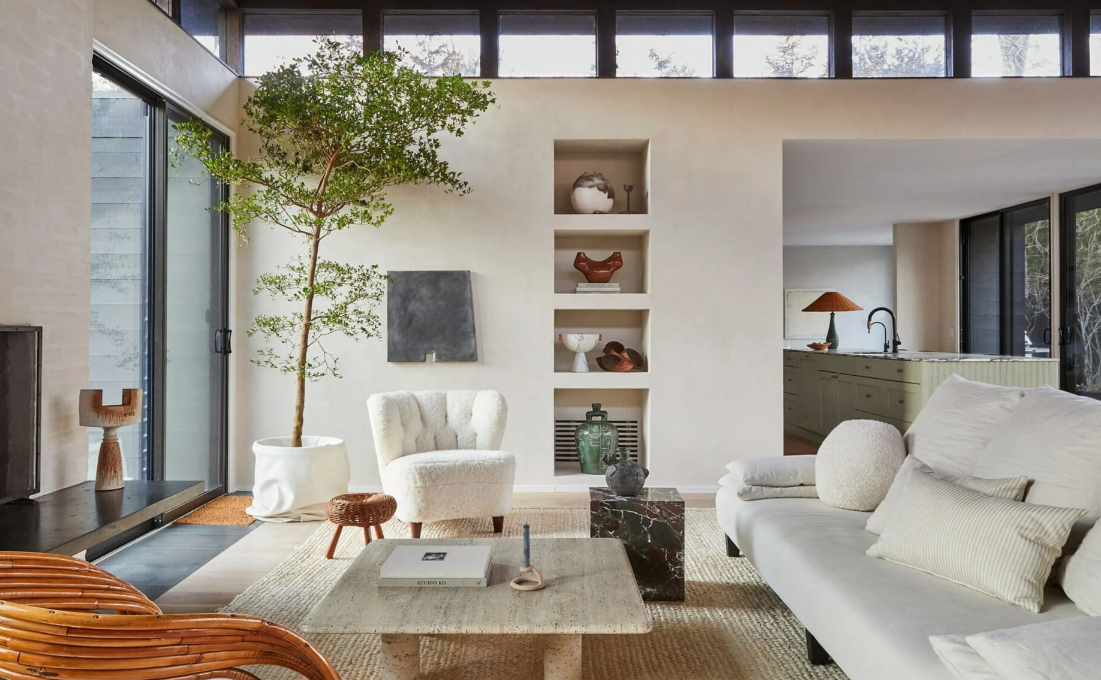
The Cost vs. Value Equation
| Material | Environmental Impact | Longevity | Cost |
|---|---|---|---|
| Reclaimed wood | Very Low | Very High | Medium-High |
| Recycled glass tiles | Low | High | Medium |
| Jute/sisal rugs | Very Low | Medium | Low-Medium |
| Vintage furniture | Very Low | High | Variable |
| Low-VOC paint | Low | Same as standard | Slightly Higher |
Trend #7: Multifunctional Spaces — Design That Works Harder
One Room, Many Jobs
Post-pandemic life changed how we use our homes forever. The home became an office, a gym, a school, a restaurant, and a sanctuary — all at once.
That shift pushed modern interior design toward rooms that can serve multiple purposes without feeling chaotic or cramped.
Smart Approaches to Multifunctional Design
Murphy beds and wall beds: These fold into the wall when not in use, transforming a bedroom into a home office or studio by day and a comfortable sleeping space at night.
Built-in storage: Custom shelving and cabinetry that runs floor-to-ceiling eliminates clutter and gives every item a home.
Expandable dining tables: A table that seats 2 for weekday breakfasts but expands to host 8 for weekend dinners is a small change with huge impact.
Room dividers: Instead of permanent walls, movable partitions, curtain dividers, or bookshelf walls let you reshape a space as needed.
Banquette seating with storage: Built-in bench seating in kitchens or dining areas hides storage underneath while saving floor space.
Multifunctional Room Design Checklist
✅ Does the room have clear zones for different activities? ✅ Is furniture mobile or modular? ✅ Is there enough storage to keep surfaces clean? ✅ Does lighting support different moods (bright for work, dim for relaxing)? ✅ Can furniture fold, stack, or transform when not in use?
Trend #8: Bold Colors and Maximalist Accents
The Quiet Rebellion Against All-White Interiors
After years of all-white, Instagram-perfect interiors, a growing number of homeowners are pushing back. They want color. They want personality. They want rooms that feel like them.
Enter: bold color choices and maximalist accents — one of the most exciting property interior design trends happening right now.
How to Use Bold Color Without Overwhelming a Space
The key is intention. Bold doesn’t mean chaotic. It means confident.
The 60-30-10 rule is a helpful guide:
- 60% of the room in a neutral base color
- 30% in a secondary color (could be bold or muted)
- 10% in an accent color (this is where you go bold — jewel tones, deep blues, rich terracottas)
Accent walls: One deeply saturated wall — in a deep forest green, cobalt blue, or burgundy — transforms a room instantly.
Colorful cabinetry: Kitchen and bathroom cabinets in navy, sage, or black are replacing plain white and creating real drama.
Art and collectibles: Maximalism loves a gallery wall, layered rugs, and meaningful objects displayed proudly rather than tucked away.
Textured wallpaper: Bold florals, abstract patterns, and geometric designs in rich tones add visual depth that paint alone can’t achieve.
Bold Color Combinations That Work
| Base Color | Accent Color | Mood Created |
|---|---|---|
| Warm white | Terracotta + brass | Earthy, Mediterranean |
| Deep navy | Gold + cream | Luxurious, classic |
| Sage green | Dusty pink + natural wood | Calm, romantic |
| Charcoal grey | Cobalt blue + white | Bold, contemporary |
| Off-white | Forest green + rattan | Organic, serene |
How These 8 Trends Work Together
One of the most exciting things about 2025’s property interior design landscape is that these trends aren’t competing — they’re complementary.
You can easily combine:
- Biophilic + Japandi for a grounded, nature-connected sanctuary
- Warm minimalism + Smart home tech for a clean, effortless modern home
- Sustainable materials + Bold colors for an eco-conscious space that’s full of personality
- Multifunctional spaces + Statement ceilings for a practical home that still feels designed and special
The most successful interiors in 2025 don’t follow just one trend. They layer two or three thoughtfully — keeping the homeowner’s lifestyle, personality, and practical needs at the center.
Quick-Reference Summary: 8 Trends at a Glance
| Trend | Core Idea | Best For |
|---|---|---|
| Biophilic Design | Nature in every corner | Stressed, urban dwellers |
| Warm Minimalism | Clean but cozy | Small spaces, apartments |
| Smart Home Integration | Invisible tech | Tech-forward homeowners |
| Japandi Style | Japanese + Scandinavian fusion | Serene, simple living |
| Statement Ceilings | Bold ceiling treatments | Adding drama to any room |
| Sustainable Materials | Eco-friendly choices | Environmentally conscious buyers |
| Multifunctional Spaces | Rooms that do more | Work-from-home households |
| Bold Colors | Confident, expressive palettes | Personality-driven design |
FAQs: Property Interior Design Trends 2025
Q1: What is the most popular property interior design trend in 2025? Biophilic design and warm minimalism are leading the pack this year. Both focus on creating spaces that feel calm, comfortable, and deeply connected to nature — which aligns perfectly with how people want to feel in their homes right now.
Q2: How much does it cost to redesign a home interior using these trends? It varies enormously. Simple updates like adding plants, swapping light bulbs, or repainting walls can cost under $500. A full home redesign incorporating smart tech, custom cabinetry, and sustainable materials could run anywhere from $20,000 to $100,000+. Most people start with one room and build from there.
Q3: Can I mix multiple interior design trends in one home? Absolutely. In fact, the best interiors almost always blend elements from multiple styles. The key is finding a common thread — whether that’s a color palette, a material, or a mood — that ties everything together.
Q4: Is Japandi style suitable for family homes with kids? Yes! Japandi emphasizes durability and practicality alongside beauty. Natural wood, linen fabrics, and simple furniture are all family-friendly choices. The low-clutter philosophy also makes spaces easier to keep tidy.
Q5: What’s the easiest interior design trend to try on a small budget? Statement ceilings and bold accent colors offer the highest visual impact for the lowest cost. A single can of paint can completely transform a room. Biophilic design is also very budget-friendly — a few well-placed plants and some natural-fiber accessories go a long way.
Q6: How do I make a small apartment feel bigger through interior design? Warm minimalism, Japandi, and multifunctional design are your best friends in a small space. Use light colors, low-profile furniture, clever built-in storage, and mirrors to make rooms feel open and airy. Avoid heavy window treatments that block natural light.
Q7: Are these interior design trends suitable for rental properties? Many of them are! Non-permanent changes like furniture choices, lighting upgrades, plants, rugs, and removable wallpaper let renters bring these trends into their homes without violating lease agreements. Smart home features like plug-in smart bulbs are also renter-friendly.
Conclusion: Your Home, Your Story
Property interior design in 2025 is more exciting than ever. It’s no longer about following rigid rules or copying a showroom look. It’s about creating a home that genuinely supports your life, reflects your values, and brings you joy every single day.
Whether you’re drawn to the calm of Japandi, the warmth of biophilic living, the drama of a statement ceiling, or the functionality of a smartly designed multifunctional room — there’s a path forward for every budget, every taste, and every lifestyle.
Start where you are. Make one change. Then another. Over time, these small, thoughtful decisions stack up into something truly beautiful.
Your home is the backdrop to your entire life. It deserves a design that’s as dynamic, intentional, and unique as you are.