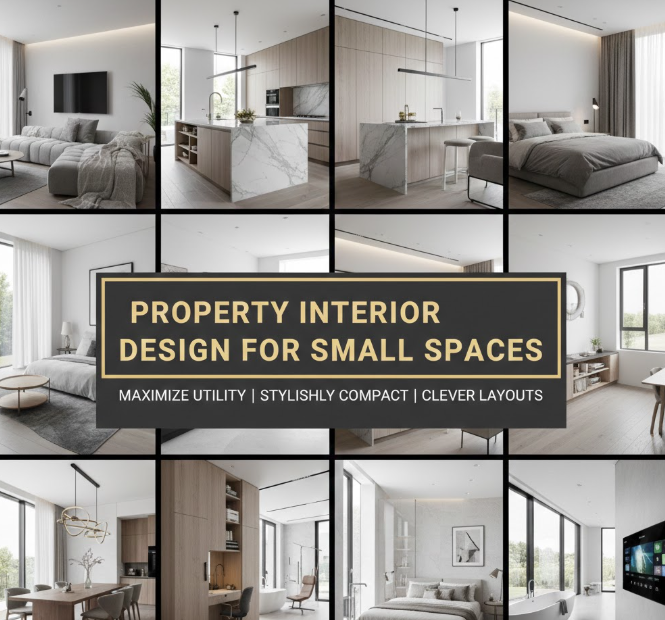
Introduction: Small Space, Big Possibilities
Good property interior design does not require a massive home. In fact, some of the most beautiful, functional, and impressive living spaces in the world are tiny. The challenge is not the size — it is how you use it.
Millions of people today live in apartments, studio units, compact townhouses, and small condos. And the number keeps growing. Urban populations are rising fast, and properties are getting smaller. But that does not mean you have to sacrifice comfort, style, or personality.
This guide will walk you through everything you need to know about designing a small space the right way. From furniture choices to color psychology, from storage hacks to lighting tricks — you will find practical, proven strategies that work in real homes.
Whether you are a renter, a first-time homeowner, or a professional looking for fresh ideas, this article has something for you. Let us dive in.
Why Small Space Design Is a Skill Worth Mastering
Small spaces are everywhere. City apartments, starter homes, vacation cottages, and even tiny houses have become mainstream living choices. According to real estate trends, the average new apartment size has been shrinking for over a decade.
But here is the good news: small does not mean cramped. With the right approach to property interior design, a 400-square-foot studio can feel open, stylish, and completely livable.
Good small-space design also adds real estate value. Buyers and renters are willing to pay more for a well-designed compact property than a poorly laid-out large one. Smart design is not just about looks — it is an investment.
The Core Goals of Small Space Design
Before you pick a paint color or buy a new sofa, you need to understand what you are trying to achieve. Small space design has three main goals:
1. Maximize usable space — Every corner, wall, and nook should have a purpose.
2. Create the illusion of openness — Smart design tricks make rooms feel bigger than they are.
3. Reflect your personality — Small does not mean bland. Your home should still feel like you.
Keep these three goals in mind as you read through the rest of this guide.
The Foundation: Smart Layouts That Open Up Any Room
Layout is everything. You can have the most beautiful furniture in the world, but if it is placed badly, the room will feel chaotic and tight. Getting your layout right is the single most important step in property interior design for small spaces.
Think in Zones, Not Rooms
In a small home, you often do not have separate rooms for every function. Instead, you create zones — distinct areas within the same open space that each serve a different purpose.
For example, in a studio apartment, you might have:
- A sleeping zone near one wall
- A working zone by the window
- A living zone in the center
- A dining zone near the kitchen
Each zone feels like its own space, even without walls separating them. The key is to define each zone with furniture placement, rugs, or lighting — not physical barriers.
The Traffic Flow Rule
Always think about how people move through your space. There should be clear, easy paths between each zone. A good rule of thumb: leave at least 36 inches (about 90 cm) of walkway space wherever people regularly pass.
Furniture that blocks natural traffic flow makes even large rooms feel small. So arrange your pieces to guide movement, not block it.
Furniture Against the Walls — Myth or Smart Move?
Many people push all their furniture against the walls to “save space.” Surprisingly, this often makes a room feel smaller, not larger. Floating furniture — pieces pulled slightly away from walls — creates depth and makes the space feel more intentional.
Try pulling your sofa 6–12 inches away from the wall. You might be surprised at how much more open the room feels.
Color, Light, and the Art of Visual Expansion
Color is one of the most powerful tools in property interior design. The right color palette can make a small room feel twice its actual size. The wrong one can make even a large space feel like a closet.
Colors That Make Small Spaces Feel Bigger
Light, neutral colors reflect light and push walls back visually. These are your best friends in a small space:
| Color Type | Examples | Effect on Space |
|---|---|---|
| Soft whites | Ivory, cream, off-white | Opens up walls, brightens rooms |
| Light neutrals | Warm beige, greige, pale taupe | Adds warmth without closing in |
| Cool pastels | Soft blue, sage green, blush | Creates calm, airy atmosphere |
| Warm whites | Linen, pearl, eggshell | Cozy but still open-feeling |
Should You Ever Use Dark Colors in Small Spaces?
Yes — but carefully. Dark accent walls can actually add depth and make a room feel more dramatic and intentional. The trick is to use a dark color on just one wall, typically the wall farthest from the entrance. This draws the eye inward and creates a sense of depth.
Dark ceilings are also making a comeback in modern small-space design. A deep navy or charcoal ceiling can make a low ceiling feel more “sky-like” and atmospheric rather than oppressive.
Maximizing Natural and Artificial Light
Light is as important as color. Here is how to get more of both:
Maximize natural light:
- Use sheer curtains instead of heavy drapes
- Hang mirrors opposite windows to bounce light around
- Keep window ledges clear of clutter
- Choose reflective surfaces for furniture and décor
Boost artificial light:
- Layer your lighting (overhead, task, and ambient)
- Use warm-white LED bulbs for a cozy glow
- Add under-cabinet lighting in kitchens
- Use floor lamps to brighten dark corners
A well-lit room always feels larger. Never underestimate the power of good lighting in your interior design plan.
Furniture That Works Twice as Hard
Furniture is often the biggest challenge in a small space. Big, bulky pieces eat up floor space and make rooms feel heavy. The solution is choosing furniture that is either visually light, multifunctional, or both.
The Golden Rules of Furniture for Small Spaces
Rule 1: Choose multifunctional pieces. A sofa that converts to a bed, an ottoman with hidden storage, a dining table that folds against the wall — these pieces do double or triple duty and save enormous amounts of space.
Rule 2: Go vertical. Tall bookshelves, floor-to-ceiling cabinets, and high-mounted shelves draw the eye upward and use wall space that would otherwise go to waste. Vertical storage is one of the most underused strategies in small-space design.
Rule 3: Pick furniture with legs. Sofas, chairs, and tables with visible legs allow light to pass underneath. This creates a sense of openness that floor-level furniture simply cannot match. Avoid large, floor-length pieces that block sightlines.
Rule 4: Scale matters. A giant sectional sofa might be your dream piece, but in a 300-square-foot studio, it is a nightmare. Choose furniture scaled to your room. Smaller rooms need smaller — but not tiny — furniture.
Top Multifunctional Furniture Picks
Here is a quick overview of the most popular space-saving furniture options:
| Furniture Piece | Primary Function | Secondary Function |
|---|---|---|
| Murphy bed (wall bed) | Sleeping | Living area when folded up |
| Storage ottoman | Seating | Hidden storage inside |
| Nesting tables | Coffee table | Extra surface when needed |
| Convertible sofa | Seating | Sleeping/guest bed |
| Drop-leaf dining table | Compact table | Full-size dining when extended |
| Bench with storage | Seating | Shoe/linen storage |
| Floating desk | Workspace | Folds flat against the wall |
Storage Solutions That Do Not Sacrifice Style
Clutter is the enemy of small spaces. Even the best property interior design falls apart when there is nowhere to put your stuff. Smart, hidden, and creative storage is the backbone of any well-designed compact home.
Hidden Storage Ideas That Actually Work
Think beyond the traditional closet. Storage can be built into almost any surface or piece of furniture:
Under the bed: Use bed risers to create clearance underneath, then store items in flat bins or pull-out drawers. A bed with built-in drawers is even better.
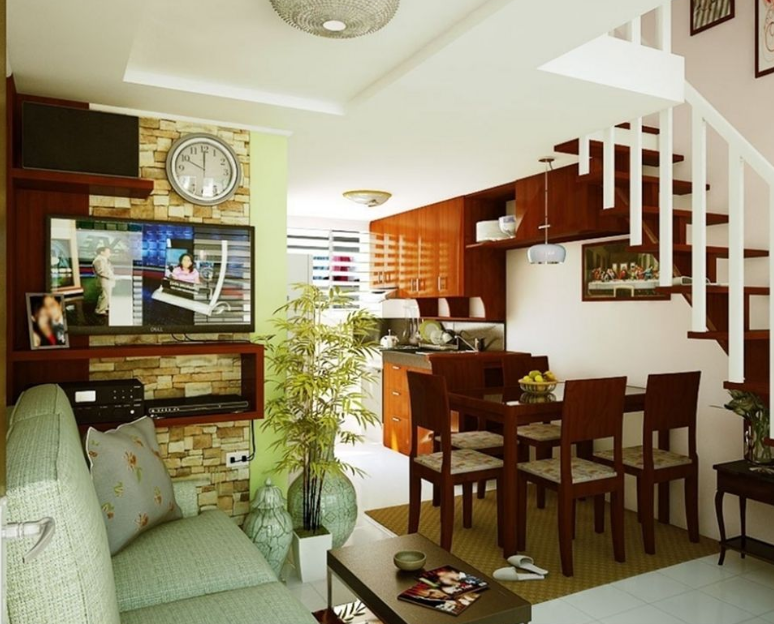
Under the stairs: If you have a staircase, the space beneath it is prime storage real estate. Pull-out drawers, a built-in bookshelf, or even a small home office can fit there.
Inside walls: Built-in shelving recessed into walls saves floor space completely. It looks custom, clean, and maximizes every cubic foot.
Behind doors: Over-the-door organizers are not just for college dorms. Elegant versions exist for kitchens, bathrooms, and bedroom doors.
The Declutter-First Rule
No amount of clever storage will help if you own too much stuff. Before redesigning a small space, do a thorough declutter. The KonMari method, the 90/90 rule (have you used it in the last 90 days or will you in the next 90?), or a simple one-in-one-out policy can all help keep small spaces manageable long term.
Room-by-Room Design Guide for Small Spaces
Every room in a small property has unique challenges. Here is how to tackle each one.
Small Living Room Design
The living room is where most people spend the most time, so it deserves extra attention.
Key strategies:
- Use a single large rug to define the seating area (avoid multiple small rugs — they chop up the space)
- Mount your TV on the wall instead of using a bulky entertainment unit
- Choose a sofa with storage underneath or a built-in chaise
- Use mirrored or glass-top coffee tables to keep the space feeling open
- Go for built-in shelving rather than freestanding bookshelves
Small Bedroom Design
The bedroom needs to feel restful, not cluttered. This requires strict discipline.
Key strategies:
- A platform bed with built-in drawers eliminates the need for a separate dresser
- Use floating nightstands (wall-mounted) instead of bedside tables on legs
- Install a built-in wardrobe that reaches the ceiling — this maximizes vertical space and removes the need for a dresser
- Keep your color palette calm and consistent — the bedroom is not the place for bold, busy patterns
- Use blackout curtains to improve sleep quality without making the space feel smaller — go for floor-to-ceiling curtain panels to make ceilings look taller
Small Kitchen Design
Kitchens are notoriously tricky in small properties. Every inch of counter and cabinet space is precious.
Key strategies:
- Use open shelving on one wall to avoid the closed-in feeling of too many upper cabinets
- Install a magnetic knife strip and hooks on the backsplash to free up drawer space
- Choose compact, integrated appliances — a single-drawer dishwasher, a two-burner induction cooktop, and a counter-depth refrigerator can save enormous space
- A kitchen island on wheels gives you extra prep space when needed and rolls away when not
- Light-colored cabinets with handleless fronts keep the visual noise low and the space feeling clean
Small Bathroom Design
Bathrooms are often the most space-constrained room in the house. But smart interior design can make even the tiniest bathroom feel like a spa retreat.
Key strategies:
- Install a wall-hung toilet and floating vanity — this exposes more floor, making the room feel immediately larger
- Use large-format tiles with minimal grout lines — fewer lines means fewer visual interruptions
- Replace a shower curtain with a clear glass panel — the eye can travel through it, creating depth
- Use a recessed medicine cabinet instead of a surface-mounted one
- Add a heated towel rail instead of a traditional towel bar — it serves double duty as storage and a subtle heat source
Mirrors, Patterns, and Visual Tricks That Expand Space
Beyond color and furniture, several other design tools can dramatically change how a space feels.
The Mirror Strategy
Mirrors are one of the oldest tricks in property interior design. They reflect light and create the illusion of a second room beyond the wall. Here is how to use them effectively:
- Place a large mirror on the wall opposite your main window
- Use a full-length mirror in the bedroom or hallway
- Group smaller mirrors on one wall for a gallery effect
- Choose mirrors with slim or metallic frames to keep the look light
Patterns: Friend or Foe in Small Spaces?
Patterns can work in small spaces — you just need to use them strategically. Here is a simple guide:
Vertical stripes: Make ceilings look taller. Great for wallpaper or curtains.
Horizontal stripes: Make rooms look wider. Use on rugs or an accent wall.
Large-scale patterns: Use sparingly — one patterned rug or cushion set is enough. Too many large patterns create visual chaos.
Geometric patterns: Work well in modern small spaces. Keep the color palette consistent.
Technology and Smart Home Features for Small Properties
Modern technology has opened up exciting new possibilities for small space living. Smart home features can reduce physical clutter, improve functionality, and even make rooms appear larger.
Smart Storage and Automation
- Smart lighting systems (like Philips Hue) let you adjust color temperature and brightness to change the mood without multiple lamps cluttering the space
- Motorized window blinds are controlled by an app — no cords, no bulk, completely seamless
- Voice-controlled assistants (like Amazon Echo or Google Home) reduce the need for physical devices on shelves and counters
- Under-floor heating removes the need for visible radiators, freeing up significant wall space
Minimalist Tech Integration
The best tech in a small space is the tech you cannot see. Recessed speakers, hidden charging ports built into furniture, and wall-mounted tablets as smart home controllers all help keep surfaces clear and visual noise low.
Common Mistakes People Make in Small Space Design
Even experienced designers make these mistakes. Knowing what to avoid is just as important as knowing what to do.
The Five Biggest Small Space Design Mistakes
Mistake 1: Buying furniture that is too big. It seems obvious, but it happens constantly. Always measure twice before you buy. Bring a tape measure and test the furniture in your actual space before purchasing.
Mistake 2: Ignoring vertical space. Most people design from floor to eye level. Everything above that is wasted. Use your walls all the way to the ceiling.
Mistake 3: Using too many different materials and finishes. A cohesive material palette makes a space feel unified and calm. Too many different wood tones, metals, and fabrics create visual chaos.
Mistake 4: Skimping on lighting. One overhead light is almost never enough. Layer your lighting always.
Mistake 5: Copying a design without adapting it. Pinterest and Instagram are full of gorgeous small spaces. But those photos are styled for the camera, not for living. Always adapt designs to your actual lifestyle and needs.
Budget-Friendly Small Space Design Tips
Great property interior design does not have to cost a fortune. Some of the most effective small-space design strategies are also the most affordable.
High-Impact, Low-Cost Changes
| Change | Approximate Cost | Impact |
|---|---|---|
| Fresh coat of light-colored paint | $50–$150 | Very high |
| Rearranging existing furniture | $0 | High |
| Adding a large mirror | $30–$100 | High |
| Decluttering and organizing | $0–$50 (bins/baskets) | Very high |
| Replacing curtains with sheer panels | $20–$80 | Medium-high |
| Adding under-bed storage containers | $20–$60 | High |
| Installing floating shelves | $30–$100 | High |
As you can see, many of the most impactful changes are also the cheapest. Start with what you have, then invest strategically in key pieces.
FAQs: Property Interior Design for Small Spaces
Q1: What is the best color for a small room to make it look bigger?
Soft whites, light neutrals, and cool pastels are the best choices. Crisp white and warm ivory are the most popular options because they reflect the most light. Pair them with natural wood accents to avoid the space feeling too clinical.
Q2: How do I make a studio apartment feel like a one-bedroom?
Use zoning techniques — define your sleeping area with a room divider, a bookshelf, or a curtain. Keep your bed area visually separate from your living area. Use consistent flooring throughout but change the rug in each zone to reinforce the separation.
Q3: What furniture should I avoid in a small space?
Avoid oversized sectional sofas, bulky entertainment units, and large freestanding wardrobes. Also avoid glass cabinets filled with items — they look cluttered even when organized. Skip anything that sits directly on the floor without legs, as it blocks light and makes rooms feel heavier.
Q4: Is open-plan living always better for small spaces?
Generally, yes — removing unnecessary walls opens up sightlines and makes the space feel larger. However, open plans can also make noise management and privacy harder. If you work from home or share the space, consider a partial partition or strategic shelving instead of a fully open plan.
Q5: How often should I redesign or refresh a small space?
You do not need a full redesign every year. A seasonal refresh — swapping out cushions, adding new plants, rearranging a few pieces — can completely transform the feel of a small space. Aim for a more substantial refresh every 3–5 years as your lifestyle and needs change.
Q6: Can I use wallpaper in a small room?
Absolutely. Wallpaper on a single accent wall (especially behind a bed or sofa) adds depth and personality without overwhelming the space. Choose lighter-colored patterns with vertical elements for the best effect.
Q7: What is the single best investment for small space design?
Built-in storage. Nothing transforms a small space more dramatically than custom-built shelving, cabinets, or a built-in wardrobe. It is the one area where spending a little more money pays off consistently in both livability and resale value.
Conclusion: Your Small Space Deserves Great Design
Size is just a number. With the right strategies, even the smallest property can become a place you love coming home to every single day.
Great property interior design for small spaces comes down to a few core principles: smart layouts, light colors, multifunctional furniture, creative storage, and a commitment to keeping clutter under control. Layer in good lighting, strategic mirrors, and a cohesive color palette, and you have everything you need.
The most important thing is to start. Even small changes — rearranging your furniture, adding a mirror, painting one wall — can make a noticeable difference immediately. You do not need a massive budget or a professional designer to create a home that works beautifully for you.
Your space is your canvas. Make every inch of it count.